
July 16, 2026
From a portal view, Baywood-Los Osos looks like the quieter, slightly cheaper cousin of Morro Bay and Cayucos. Same bay, similar cottages, milder afternoons. As of June 3, 2026, the local snapshot showed 26 active Los Osos listings at a median list of $1,074,500 and an average of 77 days on market, with average price per square foot at $677.79. Cayucos and Morro Bay comps sit higher on price and typically move faster.
The instinct is to read that gap as softness. It isn't. It's friction. Los Osos is a regulated-scarcity market, and every buyer inherits a stack of rules that only started changing in 2026. If you're comparing this town to its coastal neighbors, the price on the listing is the smaller half of what you're actually underwriting.
For 36 years the town operated under a de facto building freeze that started with a 1988 ban on new septic systems and hardened into a formal waitlist for undeveloped parcels. On December 16, 2025, the San Luis Obispo County Board of Supervisors approved a 0.4% growth rate for Los Osos for calendar year 2026, which pencils out to 25 new dwelling units for the entire community. On May 1, 2026, the first batch of Los Osos Habitat Conservation Plan (LOHCP) mitigation credits became available, and the County mailed the first batch of allocation letters to Waitlist-to-Build property owners on April 23, 2026.
That is the whole thaw. Twenty-five units, priority to a waitlist that has held roughly 200 to 250 owners since 1988, and a credit reservation process that gates any project causing ground disturbance. The Coastal Commission's approval of the modified Los Osos Community Plan in 2024 unlocked the door. The 2026 growth allocation is the first crack of it opening.
For a buyer, the practical read is this: near-term supply is not going to expand meaningfully. The listing you're looking at today is competing against the same closed pool of homes it competed against last year, minus a handful of new builds that will trickle out over a 20-plus-year buildout.
Inside the Los Osos sewer prohibition zone, the 1% ad valorem property tax is only the top of the stack. Sewer service began riding on the tax bill in Fiscal Year 2017-18, and Los Osos Community Services District (LOCSD) layers additional charges on top. The items below are the recurring line items disclosed by LOCSD and SLO County Public Works for a typical single-family parcel:
| Line item | Amount | Collected by |
|---|---|---|
| Wastewater Assessment District #1 | ~$201.52 per typical SFR | SLO County |
| SLO CO SWR Rate/Charges (operating) | Minimum charge + volume charge based on Jan–Feb metered water | SLO County Public Works |
| Fire Special Tax | $20.56 per unit of benefit | LOCSD |
| Drainage Special Tax | $16.00 per parcel | LOCSD |
| Bayridge Estates Service Charge (if applicable) | $68.02 per parcel | LOCSD |
| Vista de Oro Service Charge (if applicable) | $82.18 per parcel | LOCSD |
The Wastewater Assessment District #1 line is a bond assessment tied to the debt that built the collection system and the Los Osos Water Recycling Facility. Two loans funded that debt, and a USDA loan covered roughly two-thirds. Individual parcel amounts vary because in 2008 a licensed engineer set each parcel's assessment based on special benefit received from construction. Ask for the actual figure on the specific APN before you write the offer, not a neighborhood average.
The operating sewer charge has a wrinkle worth flagging. The volume component is calculated from metered water use in January and February of the current calendar year, then annualized. A seller who spent that window in Palm Desert may show a light bill that a full-time occupant will not replicate.
This is where the friction concentrates, and where I've watched deals go sideways.
An undeveloped parcel inside the sewer service area cannot pull a construction permit on its own timeline. It needs a Growth Management Ordinance (GMO Title 26) allocation, and starting May 1, 2026 the process runs through a Development Request Form filed with County Planning & Building. It also needs LOHCP habitat mitigation credits for any project that will disturb ground, which is essentially every new home. The Credit Reservation Form functions as a temporary Certificate of Inclusion, with expiration dates, and the official COI only issues when conditions of approval are met and LOHCP fees are paid at building permit within a one-year window.
Waitlist owners get first call on allocations. A buyer purchasing a vacant lot today is buying that lot's position, not a shovel-ready homesite. Deferral is allowed, but the 90-day clock to submit a complete construction permit application starts when the County notifies the owner of eligibility.
New development in Los Osos must be water-neutral. New structures require a 2:1 offset under the County's Retrofit-to-Build program, meaning the incoming demand has to be more than cancelled out by conservation retrofits elsewhere in the basin.
That rule shapes remodels and ADUs too. Los Osos sits on a Level III severity groundwater basin, and unlike Morro Bay (state water) or Cayucos (Whale Rock Reservoir), the basin is the community's only water source. Historical nitrate loading from septic use degraded the Upper Aquifer, which pushed purveyors deeper into the Lower Aquifer. Every additional gallon of demand has to answer to that.
Put the June 2026 numbers back on the table with the mechanism in view. Twenty-six active listings. Median list $1,074,500. Average DOM 77. Average $/sqft $677.79.
The DOM figure is the one buyers misread most often. In a market where the housing stock is a genuine mix of original cottages, mid-century rebuilds, and custom bay-view homes, comps are thin and each transaction takes real diligence. Buyers pull the assessment roll to see the Wastewater District #1 line. Lenders ask about the sewer service charge history. Anyone eyeing an addition or an ADU needs a call with the County to understand water-neutral compliance before removing contingencies. Seventy-seven days is what careful underwriting looks like, not softness.
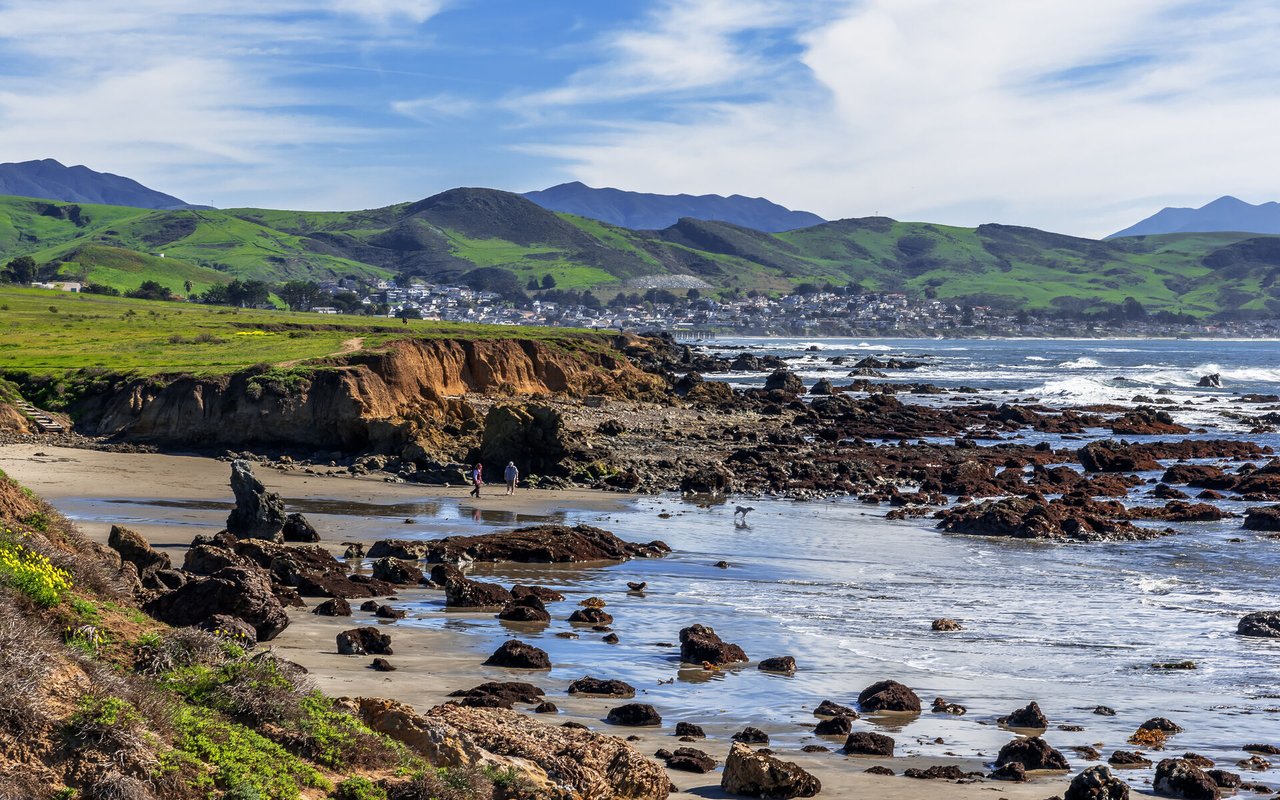
The price-per-square-foot number rewards the same interpretation. Baywood Park frontage with a view of Morro Rock, the estuary, and the sandspit is scarce and gets priced accordingly. Inland lots east of South Bay Boulevard trade at a meaningful discount to the median. A single blended $/sqft figure across those two submarkets is a starting point, not an answer.
Does the 2026 growth allocation mean the moratorium is over? No. The Board of Supervisors set a 0.4% growth rate for calendar year 2026, which allows 25 new dwelling units community-wide. General Manager Ron Munds has described the buildout horizon as 20-plus years with annual monitoring and the ability to slow or stop if the basin data warrants it.
Are the sewer assessments transferable or do they reset at sale? The Wastewater Assessment District #1 assessment is a parcel-based debt obligation and continues with the property. The annual operating sewer service charge continues as well, though the volume component recalculates from metered water use each year.
Why do Los Osos, Morro Bay, and Cayucos price so differently when they share a coastline? Water source and regulatory posture. Morro Bay draws on state water, Cayucos uses Whale Rock Reservoir, and Los Osos relies exclusively on its groundwater basin. That single fact drives the building rules, the assessment stack, and ultimately the price-per-square-foot spread you see across the three towns.
If you're weighing a Baywood-Los Osos purchase against a Morro Bay or Cayucos alternative, or you own a Los Osos parcel and want a clear read on what your Waitlist position and assessment stack mean for pricing today, Susie Brans works through the specific line items, County letters, and comps with you before you commit. Schedule a Consultation.
Continue exploring market updates, tips, and community news.
October 22, 2026
October 15, 2026
October 8, 2026
October 1, 2026
September 24, 2026
September 17, 2026
September 17, 2026

September 10, 2026

September 3, 2026
Experience unmatched service, integrity, and results when you partner with Susie for your next move.
Susan Brans | CA DRE# 01710596
Address 711 Tank Farm RD STE 100 San Luis Obispo CA 93401